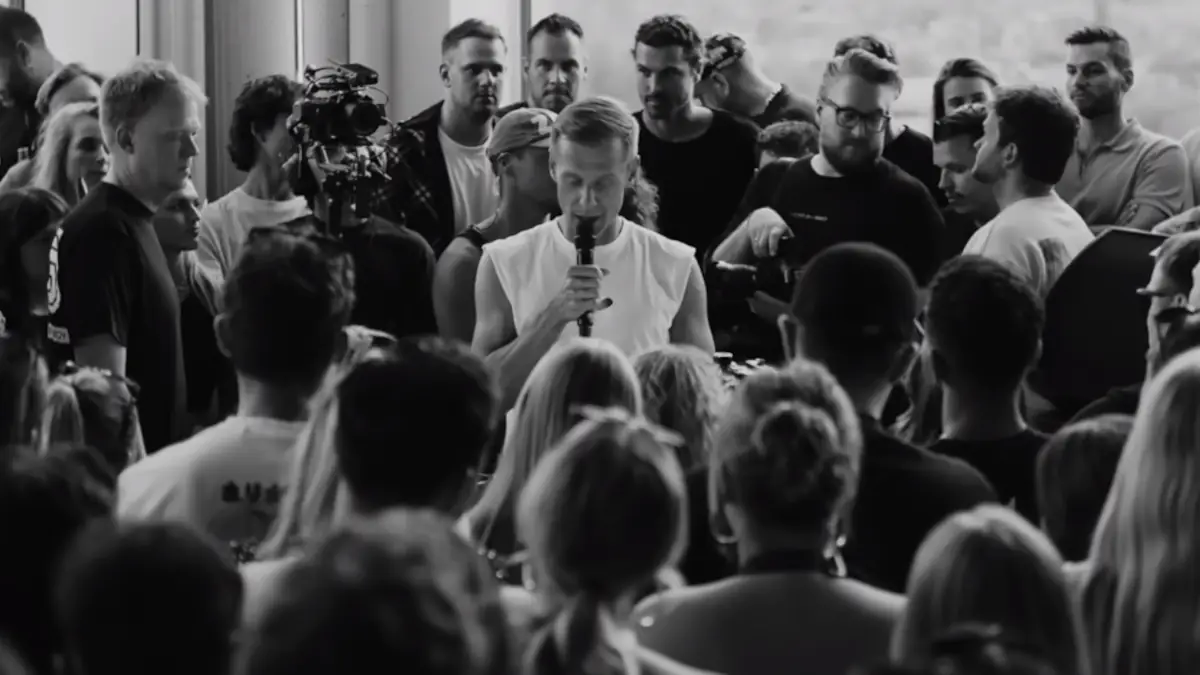
The building is still there. Armin van Buuren pointed at it from the stage at The Loft Amsterdam, and for a moment the room went slightly quieter — the way crowds do when something stops being a show and gets real. Twenty-five years ago, somewhere inside or near that structure, he hosted the first episode of A State of Trance. He drove himself there. He set up, pressed record, and had no particular reason to believe any of it would matter past the following week.
It mattered a little more than that.
ASOT — the shorthand trance fans use the way football supporters use abbreviations for their clubs — has aired continuously since 2001. The Amsterdam anniversary show was not a retrospective. It was a room full of people who needed no convincing that something real had happened over those 25 years. And was still happening.
How a Radio Show Stayed Relevant for 25 Years
The obvious explanation for ASOT’s longevity is Armin himself — his consistency, his catalog, his multiple DJ Mag number-one finishes. But the more interesting explanation came out of his mouth onstage.
He did not take the anniversary for himself. He spent the opening minutes of his speech tracing the show’s connective tissue — ICQ, the Armind forum, trans.nu, eventually Discord — and made the case that the show’s shape has always been determined by its audience. “Your feedback is what shaped this radio show,” he told the crowd. “A State of Trance is not just my radio show. It’s a show for the fans, and in many ways by the fans.”
That is not a standard anniversary speech. Most DJs playing a 25th celebration would run a victory lap. Armin gave the credit away, and the room responded like he had said something true — because he had.
Trance fans organized online earlier and more intensely than most music communities. They were on dial-up forums, building lists and chat groups, before most genres had found the internet at all. They are not casual followers. Armin understood, early or maybe instinctively, that a show built around that audience had to behave like one of them: responsive, obsessive, and willing to admit that the music was always bigger than the host.
What He Said About Trance
Before the set started, Armin made one detour that had nothing to do with milestones or thank-yous. He described, in plain terms, what trance actually does to a person.
“Trance music reaches deep into the soul if you’re open to it. It cuts through you like a knife.”
Then: “Goosebumps. Have you ever had that?”
The room answered loudly enough that you didn’t need to be inside to understand something was happening.
He talked about connection on a trance dance floor — the emotion, the shared drop, the particular euphoria of a room full of strangers who feel the same thing at the exact same moment. “If heaven exists on earth,” he said, “it’s probably this dance floor tonight.”
There is a version of that line that sounds like a stock quote. Inside The Loft, with a crowd that had spent 25 years with this show, it didn’t.
Join the Most Exclusive Club in EDM

The Part Where He Thanked Everyone, and Actually Meant It
The speech ran long by DJ standards. Armin named Ruben Durant by name. He acknowledged the production team. Then he said something that stuck: “If your music was ever played on my radio show, you are part of this history. I’m just the guy in the middle passing on this incredible music that you create.”
Two and a half decades of curating other people’s work, and he still describes himself as the middleman. You can call that false modesty. You can also argue it’s the most accurate thing anyone has said about what a genuinely good radio host does. Either reading explains why the room was full.
The Set
When the music finally came, The Loft became something else. Hours of trance — the driving basslines, the melodic builds, the particular stillness that settles in just before a drop — moved through the space in a way that made the speech feel like prologue rather than centerpiece. Which, in fairness, it was.
Phones went up. The crowd sang along to tracks they’d known for years. Near the end, Armin asked: “Who’s ready for another 25 years of A State of Trance?”
Nobody needed to think about it.
Frequently Asked Questions
A State of Trance — ASOT — is a weekly radio show and podcast hosted by Dutch DJ and producer Armin van Buuren. Running continuously since 2001, it is among the longest-running electronic dance music programs in broadcast history.
25 years as of 2026, which by any reasonable measure makes it an outlier in a format where most DJ-hosted programs last a fraction of that.
A Dutch DJ, producer, and label owner who has been ranked number one on DJ Mag’s Top 100 DJs list multiple times. He is generally regarded as one of the central figures in trance music’s global reach across the past two decades.
Trance fans organized online earlier and more intensively than most music communities — they were on forums and private chat groups before most genres had found the internet. That early infrastructure produced a fanbase that is unusually connected and unusually loyal. ASOT is partly a product of that culture. It is also one of the reasons that culture persisted.
Be Part of the EDM Lifestyle

More Armin van Buuren
What Comes Next
His closing wasn’t backward-looking. He thanked the DJs and producers who joined him that night with the same directness he’d given the rest of the speech — no ceremony, just acknowledgment — then pointed forward. If the anniversary show was meant to mark an ending, Armin didn’t receive that memo.
The trance community has always been better at continuation than nostalgia. Apparently so has he.
Browse the EDM artist profiles for longer reads on the DJs and producers who shaped electronic dance music into what it is today. If you want to stay across the culture between events, the EDM blog covers the nights that matter — milestone sets, scene dispatches, and whatever comes next.
